Keep your paycheck and your clients
99% of students keep working at the agency where they worked before starting, usually as paid RBTs, so the hours you already work count toward your 1,500 fieldwork hours. No moving and no new agency.
USF Online Master of Arts in Applied Behavior Analysis
Graduate in five semesters, fully online, while you keep your job and your RBT hours. Live evening classes and a close-knit cohort mean you study online but never on your own.
Two application deadlines each year: June 1 for Fall entry and October 15 for Spring entry.
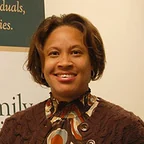
We'll email you about courses, fieldwork, cost, and how to apply. Add a question and Tracy-Ann will reply. No calls, no sharing your information, and you can unsubscribe anytime.
Built for working ABA professionals
99% of students keep working at the agency where they worked before starting, usually as paid RBTs, so the hours you already work count toward your 1,500 fieldwork hours. No moving and no new agency.
Live classes meet on Microsoft Teams Wednesday and Thursday, 6 to 8 p.m. Eastern, so you get real discussion with faculty and classmates without missing work. Everything else fits your schedule.
Each instructor teaches one course at a time, so they're focused on your cohort instead of juggling several classes. That means more time for feedback and one-on-one help, and most faculty hold office hours into the late evening.
You move through the program with the same small cohort, and students and faculty form a close-knit community despite the online setting. An academic advisor and a fieldwork advisor support you from application to graduation.
Plan for two evening classes plus roughly 17 to 20 hours of supervised fieldwork each week.
Results
2025 results: 44 first-time BCBA candidates and 11 first-time BCaBA candidates. See the program data (opens in a new tab). *National first-time BCBA pass rate in 2025: 51%, from BACB data as reported by Behavioral Health Business (opens in a new tab).
Hear from a graduate
Faith found her way to ABA after a psychology degree, then studied remotely so she could keep gaining experience at a top fieldwork agency.
Read Faith's story (opens in a new tab)
Kevin Kent, MA, BCBA '23
From receiving ABA services to providing them as a BCBA.
“I am profoundly grateful to my instructors, I really needed you, and you were always there for me.”Read Kevin's story (opens in a new tab)

Evan Loadholtz, MA, BCBA '24
Now in medical school, bridging behavior analysis and medicine.
Read Evan's story (opens in a new tab)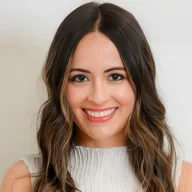
Saira Khan, MA, BCBA '20
Behavior analyst in South Florida serving clients ages 2 to 18.
Meet more alumni (opens in a new tab)“The online format allowed me to continue working full time while pursuing graduate school, making it possible to apply what I was learning directly to my work with clients.”
Emely Cabrera Falcon, Online MA graduate
“I passed the BCBA exam [weeks after graduation] and my confidence was so high because of the exam preparation [course].”
Anna Brunton, MA, BCBA '24
A distinction shared across USF Applied Behavior Analysis: the 2026 Enduring Programmatic Contributions to Behavior Analysis Award from the Society for the Advancement of Behavior Analysis. Read the announcement (opens in a new tab)
Cost
In-state, out-of-state, and international students all pay the same tuition, billed each semester.
$25,200 tuition for 42 credits
Fieldwork and curriculum
You complete all 1,500 hours of Concentrated Supervised Fieldwork during the program, with a practicum seminar every semester that connects your coursework to your clients.
Fall-start order shown; Spring starts take the same courses in a slightly different order. Official curriculum (opens in a new tab). The coursework meets the BACB's Pathway 2 requirements, including the 2027 standards. Certification and state licensure requirements are set separately and may change.
How to apply
Talk with your agency and a BCBA who can supervise you. You'll describe them on a short supervisor form; no signature is needed to apply.
Unofficial transcripts, a résumé, three letters of recommendation (BCBA supervisors and professors work well), and a one- to two-page personal statement.
October 15 for Spring entry (classes start in January) or June 1 for Fall entry (August). Decisions usually arrive one to three weeks after the deadline.
Questions
Yes. Classes meet Wednesday and Thursday evenings, and 99% of students keep working at the agency where they worked before starting, usually as paid RBTs. Your supervised fieldwork happens at that job.
Plan for two live evening classes (Wednesday and Thursday, 6 to 8 p.m. Eastern), coursework on your own schedule, and roughly 17 to 20 hours of supervised fieldwork each week. Each semester requires at least 250 fieldwork hours.
Yes. You can apply now, but you need a qualified fieldwork site and a BCBA supervisor before classes start. USF approves your site and supervisor; it does not place students or assign sites.
Tuition is $600 per credit ($25,200 for 42 credits), billed each semester. The program is eligible for federal financial aid, and many students use employer tuition assistance or the Post-9/11 GI Bill. There are no program scholarships or payment plans. Budget about $1,000 for textbooks and exam-prep software, plus university fees.
No. The GRE is not required, and any bachelor's degree from a regionally accredited school qualifies. The program looks for a 3.0 GPA and experience in ABA, such as work as an RBT. Applicants below a 3.0 can still be considered.
The program recommends entry-level ABA experience before applying. A common path is USF's 40-hour online RBT course, then a job as an RBT at an agency with a BCBA who can supervise your fieldwork.
Yes. Everyone pays the same $600 per credit. International applicants need proof of English proficiency and a course-by-course evaluation of their transcripts. Check your own state's licensure rules for behavior analysts.
The coursework meets the BACB's Pathway 2 requirements, including the 2027 standards, and the program includes the 1,500 hours of supervised fieldwork you need to sit for the BCBA exam. You can also become BCaBA eligible after your third semester. The program is under review for accreditation.
Tracy-Ann guides every prospective student through admissions. Call any time Monday through Friday. If you reach voicemail, leave a message and she will call you back.